
Hey builders! Welcome to the 41st edition of Ipê News.
🏘️ Community Updates
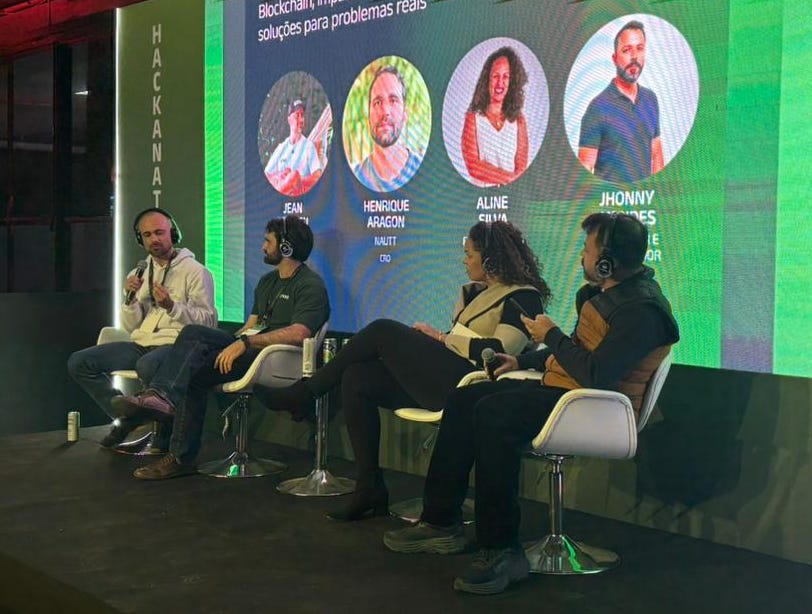
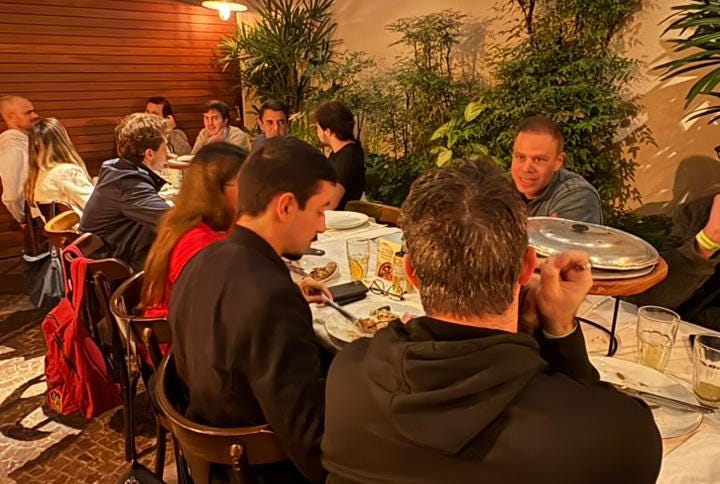
TokenNation wrapped its fourth edition on June 1 and 2 at the Pavilhão da Bienal in São Paulo, with stages running from Onchain to HackaNation. Jean Hansen took the HackaNation stage twice, once for a panel on blockchain, impact, and financial inclusion, and again for a solo talk that tied Ipê City‘s earlier experiments to what comes next. Vitoria Santos, experience lead at Ipê City and head of SheFi Brazil, spoke on community, belonging, and onboarding women into Web3. Builders of Ipê shared a dinner across the city between sessions.
🏫 Learning

Ask a voice app to take notes in a meeting, and it gives you a clean transcript. It looks like it heard the room, but often it only captured the words. It may miss who was speaking, the tone behind each line, and everything else happening in the space.
That is how automatic speech recognition, or ASR, works: speech in, text out. Models like Whisper became powerful by reducing word error rates. But when getting the words right is the only goal, everything that is not a word becomes noise.
And that “noise” is a huge part of human hearing. The same sentence can be a joke or a threat. Voices can overlap. A door closes, a dog barks, rain hits the glass, music plays under the conversation. Most transcription systems erase all of that.
Newer assistants now take audio directly, like when you talk to ChatGPT. But many still convert sound into text early, losing the acoustic details before the model can reason about them.
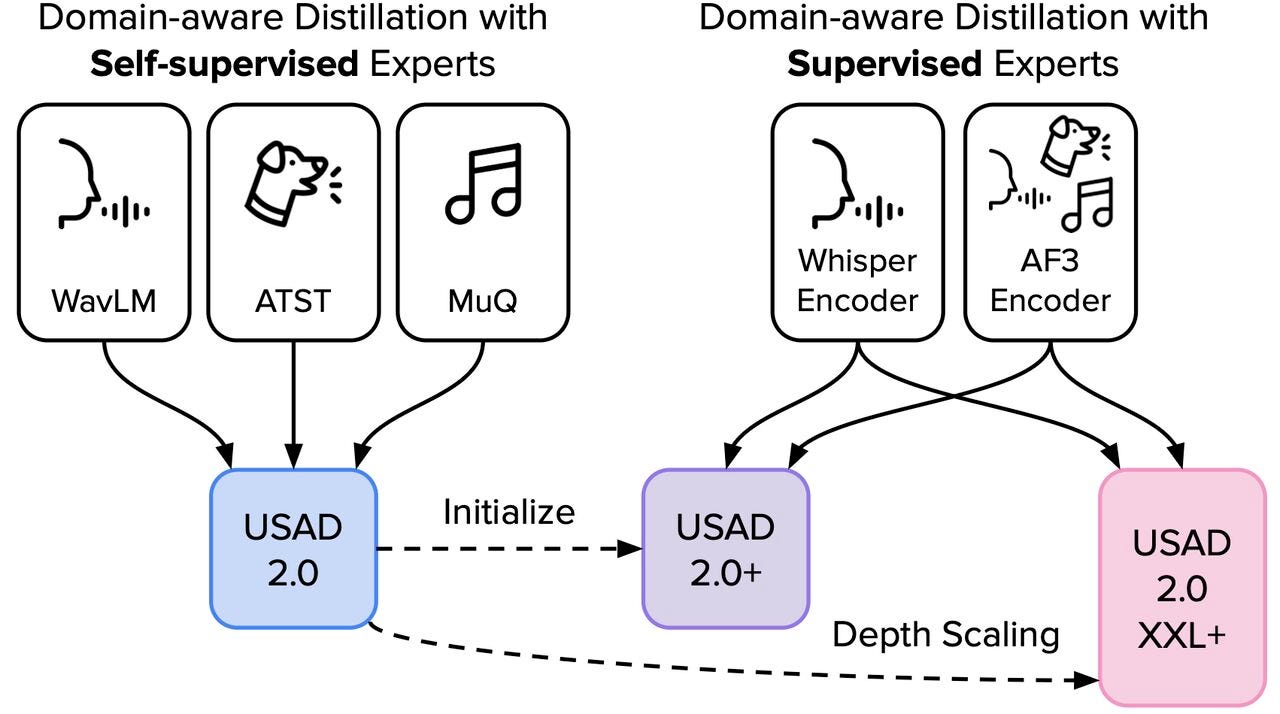
That is starting to change with real machine hearing that puts an audio encoder first, so the model can understand not just what was said, but who said it, how it was said, what else was happening, and when. That is why Interspeech 2026 is beginning to judge audio systems by what they perceive, not only by how many words they transcribe correctly.
🌐 Network Societies Update

Semur-en-Auxois is a Burgundy town of about 4,500 people, ninety minutes from Paris. From the 1st to the 30th, up to thirty families move in together under a project called Revillage, to practice permanent village life.
Revillage comes from Nikolaj Astrup Madsen and Michelle Rødgaard-Jessen, the Danish couple behind Traveling Village, which sent twenty nomad families across Asia in 2024. Days mix talks and workshops with an unhurried communal rhythm, open to children and adults alike. Families settle around the old Cité Bahut school, rehabilitated with local partners, and two thirds of each fee flows back into the town.
All of it is a probe for a permanent move into a declining European village, targeted for 2027.

Tamchy is a town on the northern shore of Lake Issyk-Kul, in Kyrgyzstan. Now becoming a special financial and investment territory trying to give international business a legal home in Central Asia.
This month the project opened its first business center, turning a zone that had mostly existed in laws, memoranda, and investor briefings into a place with an address, a front desk, and tenants to recruit. Companies operating inside Tamchy get a 49-year zero-tax window and access to an independent dispute-resolution center based on English common law, built with support from the British Embassy in Bishkek.
Ayaz Baetov, Kyrgyzstan’s justice minister and chair of Tamchy’s Management Council, framed the opening around trust. International business, he argued, is looking for anchors it can rely on, and Tamchy wants to become a financial and logistical junction between the CIS, Asia, the Middle East, Europe, and Africa.
🛠️ Parallel Institutions

Spacecoin Brings DePIN Satellites to Vietnam’s Mobifone and Gtel #Parallel Infrastructure
Most internet traffic still passes through a handful of datacenters, creating a centralized chokepoint where bot-detection blocks anything automated. For a mobile-first economy like Vietnam, owning that path is not a given.
Spacecoin signed a three-year deal with Vietnam’s DETI Technology to build a four-layer stack: decentralized satellite telecom for the physical link, sovereign routing that keeps traffic under local control, a blockchain to coordinate the network and settle payments, and Edge AI that processes data on-site rather than in a distant cloud. It plugs into carriers Mobifone and Gtel instead of replacing them.
The same logic shows up in SpaceRouter‘s proxy model, where a gateway hands each request to a coordination API that routes it through home nodes with residential IPs, instead of a datacenter relay. Whoever runs those nodes stakes tokens and shares bandwidth, earning $SPACE on-chain for the capacity they bring.
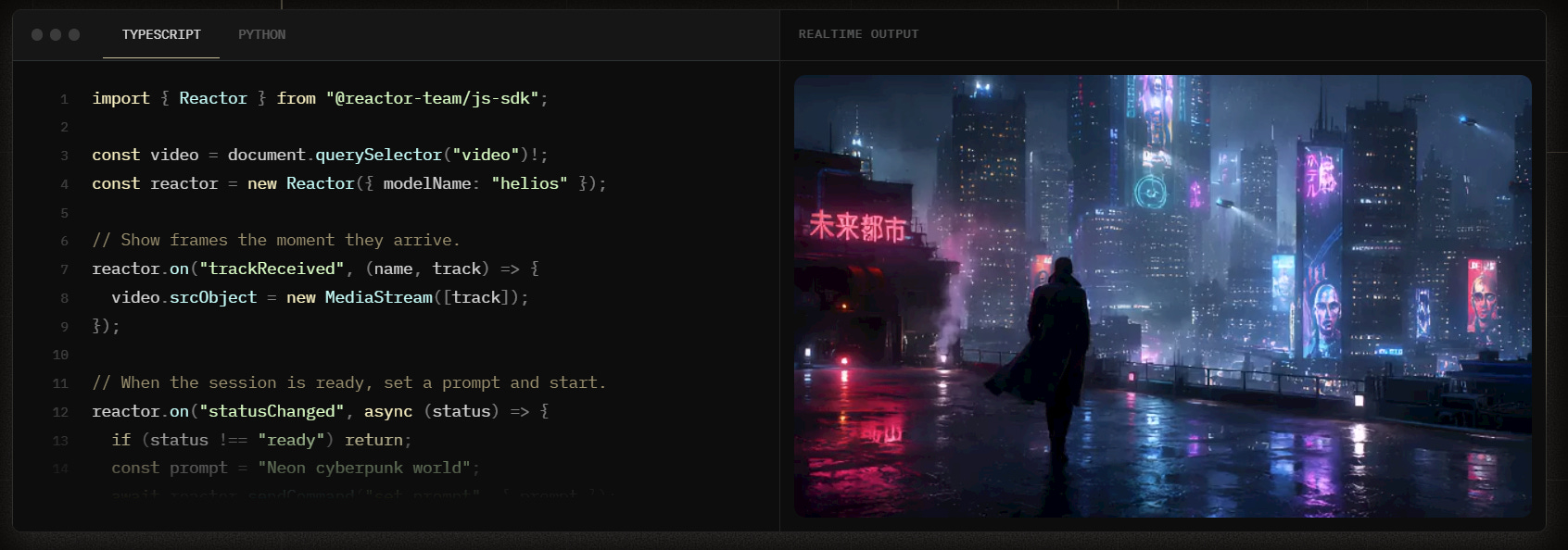
Building an interactive virtual world has meant owning the stack: an engine, GPUs, and scenes rendered ahead of time. Reactor left stealth this week with $59 million and starts elsewhere. The world is generated as you move through it, frame by frame, and steered in real time.
It serves real-time generative world models through one SDK and API. Send a prompt, a reference image, or a movement in the scene, and it returns an interactive video stream that answers in under a second. Helios, a 14-billion-parameter diffusion transformer, and LingBot, a world you walk with your keyboard. Developers connect in JavaScript, React, or Python over WebRTC; Reactor runs the GPUs.
Lightspeed led the round, alongside former Apple Vision Pro engineers. Generating an interactive world now looks less like a production and more like a request. The beta opens at docs.reactor.inc.
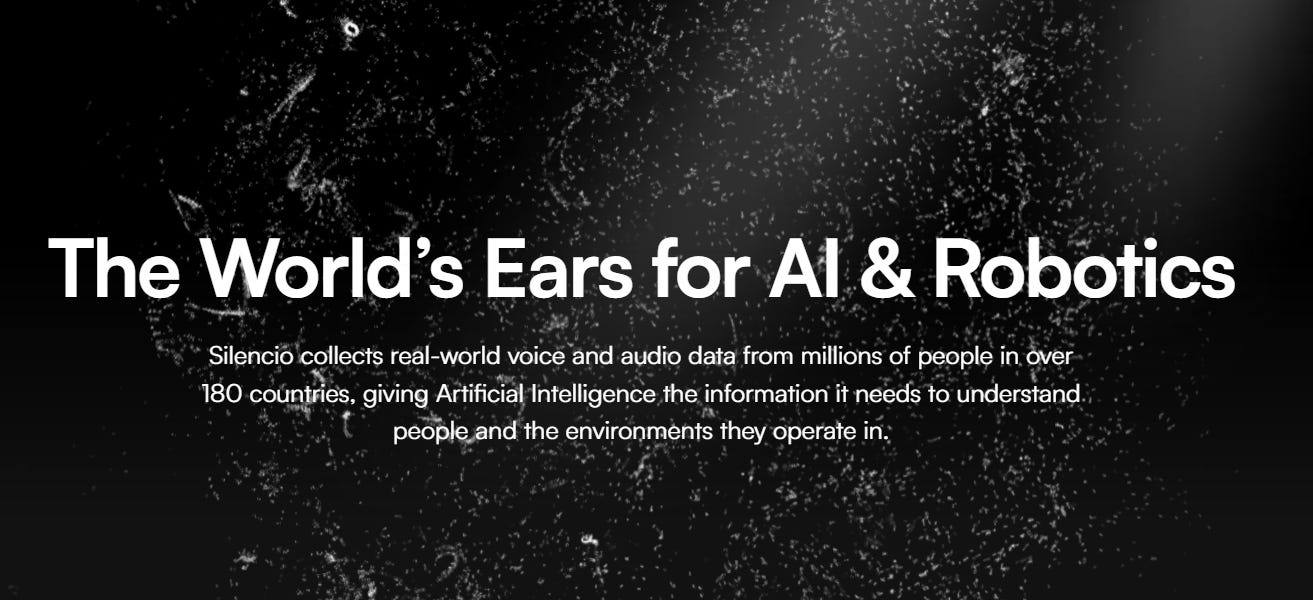
If machine hearing needs more than transcripts, it also needs something to learn from. Clean studio recordings are not enough. Models have to hear streets, cafes, kitchens, traffic, accents, background noise, and the messy overlap of real life.
Silencio Network is a DePIN project that turns phones and browsers into a distributed audio-sensing network, collecting voice, ambient sound, and noise-level data from contributors around the world. The project says its network now reaches 180+ countries, with 1.5M+ participants and more than 11 million hours of real-world sound data.
The point is not to build another transcription app. Silencio wants to become a data layer for the models behind machine hearing: richer voice datasets, labeled ambient sounds, noise maps, and eventually live audio streams for context-aware AI and robotics. Contributors supply the raw signal; the network packages it into datasets and APIs for companies, researchers, and cities.
🌍 Other Interesting News
LM Studio 0.4.16 shipped Locally, an iPhone and iPad app that talks to models running on your Mac. Its LM Link connects the two over an encrypted Tailscale mesh, so inference happens on the desktop while the conversation stays on the phone. A pocket front end for the models already humming at home.
Data Center is a simulation game that has you build computing infrastructure from an empty room: buy racks, install servers and switches, then connect every Ethernet cable yourself. Each customer’s traffic appears as colored packets rolling along your wiring, so bottlenecks and idle links show up the way load does in a real facility. It sells for about ten thousand won, under ten dollars, and holds a Mostly Positive rating across more than seven hundred reviews, with players calling it one of the clearest ways they have found to understand how a data center actually fits together.
💡 Join Ipê City Community
Follow the journey and join the community on Telegram.