


Hey builders! Welcome to the 48th edition of Ipê News.
🏫 Learning

When Kazakhstan signed a memorandum of understanding with Network School last week, the document recorded shared intentions on AI education, research, and talent programs.
A memorandum of understanding specifies the areas two parties want to cooperate on and who does what in broad terms. The document moves fast. It skips the procurement of a formal contract, the ratification of a treaty, and the zoning approval of a license. Governments use MoUs for that speed, to announce alignment before law and budget catch up.
A typical MoU does not create an obligation a court can enforce. If one party pulls out, the other side resorts to political pressure or renegotiation. An MoU sits early in the sequence. Later steps can include a binding contract, a budget line, a visa rule, a license, a decree, or a law. Those instruments are what a court, a ministry, or a bank can act on.
🌐 Network Societies Update
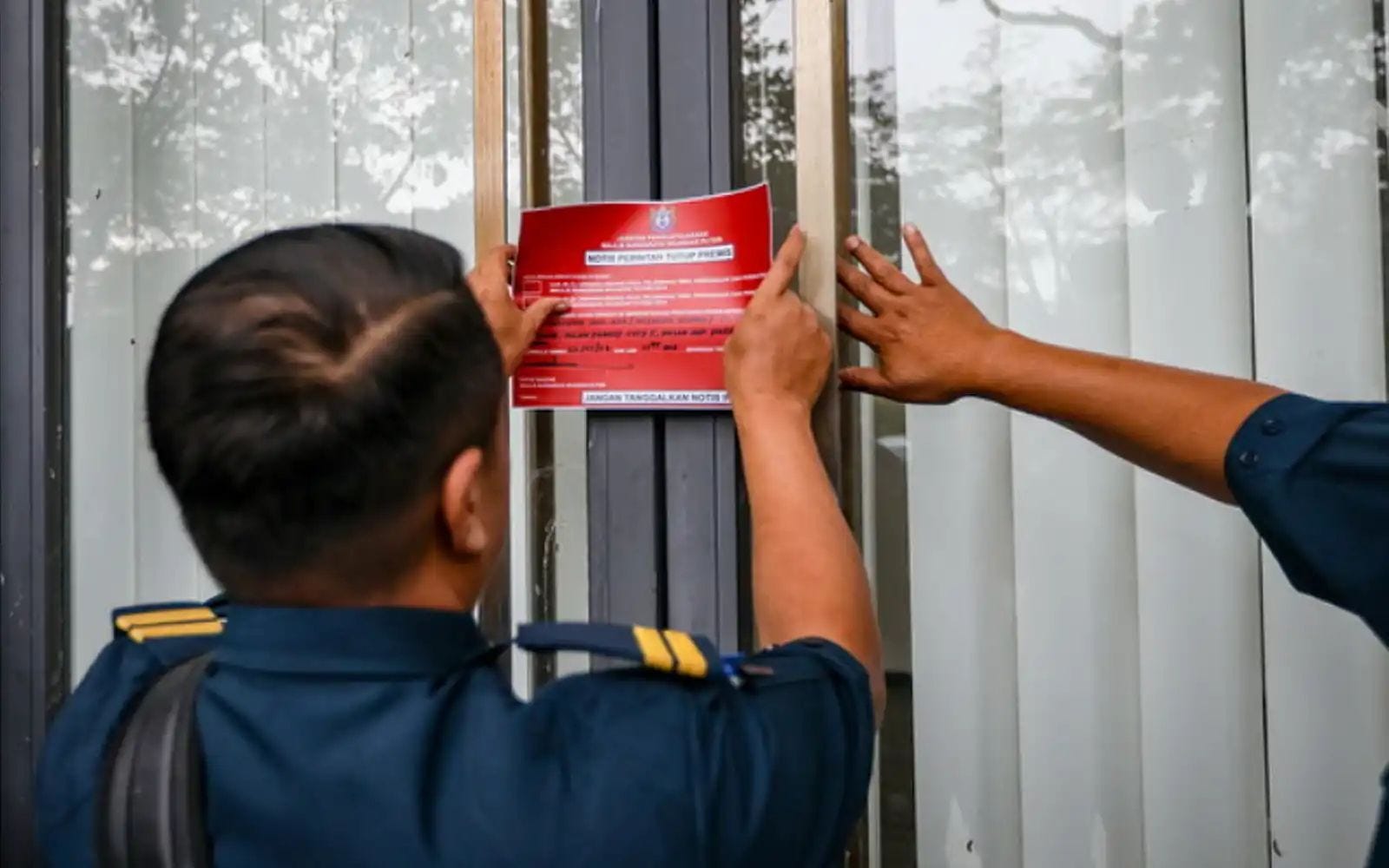
The same week Malaysia sealed Network School‘s Forest City premises, the project signed a campus MoU in Kazakhstan. On 21 July, authorities revoked NSO Malaysia’s business licence. Enforcement officers sealed four co-working shoplots the next morning, removed signboards, and posted a closure notice.
Johor’s chief minister Onn Hafiz Ghazi backed the action, stating no investor can be placed above the sovereignty of the country’s laws. The MoU, signed by Kazakhstan AI Minister Zhaslan Madiyev and Balaji Srinivasan, covers five years of AI education, research, and tech entrepreneurship, with both parties exploring a Network State Conference in Kazakhstan in 2026. MDEC separately announced steps to revoke NSO Malaysia’s Malaysia Digital status.
Balaji described the Kazakhstan campus as a “haven for global techno-optimism”, with expedited visas and streamlined redomiciliation for talent. The MoU is a five-year framework. For context on the region, Ipê News covered the Alatau charter-city zone in #40 and its Solana crypto cluster MoU in #45.
🛠️ Parallel Institutions

National regulators review experimental treatments one by one, a bottleneck that can stretch years. Montana’s SB 535 writes a parallel track: independent Experimental Treatment Review Boards assess the safety of post-phase-1 therapies, licensed specialized clinics (ETCs) deliver them, and the state monitors reporting and can revoke licenses. On 25 July, Niklas Anzinger announced that Infinita formed the first ETRB under that law, with a $12,500 submission fee for developers seeking a safety review.
The board’s mandate covers safety only: a therapy must show a phase-1 equivalent profile, and efficacy decisions stay with the doctor and patient. In practice, a patient without approved options in Montana can now access a vetted post-phase-1 treatment without waiting for full FDA review.
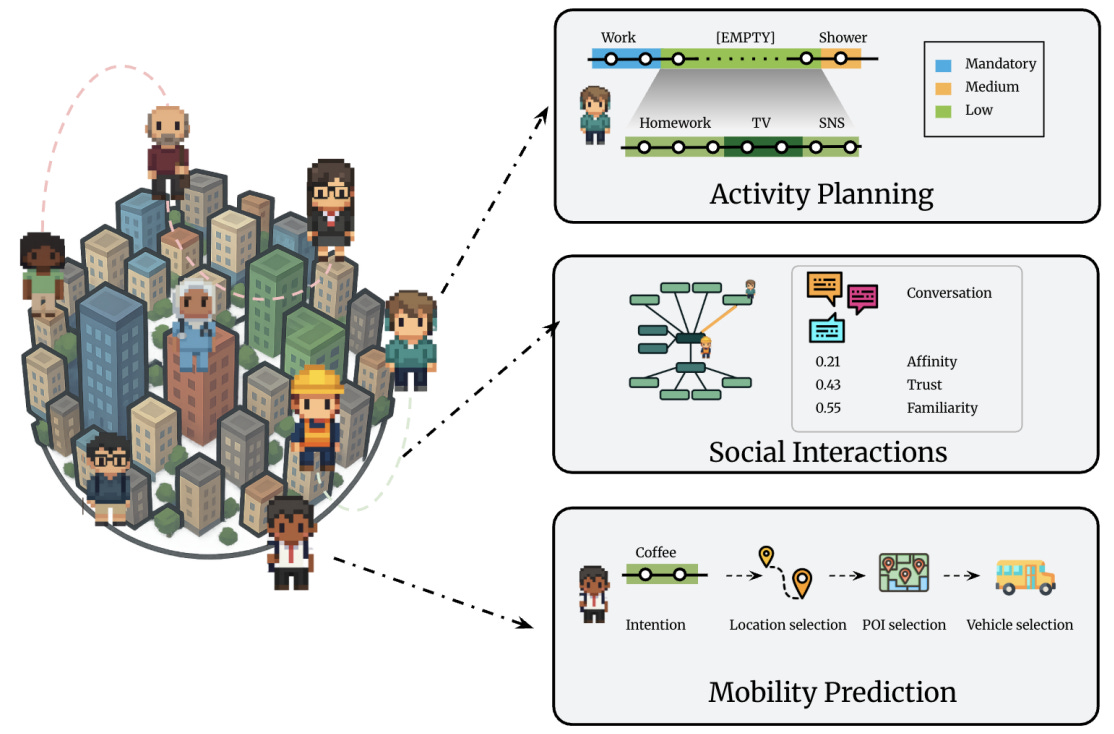
CitySim: LLM Agents Simulate Tokyo Urban Life and Match Real Commute Patterns #ParallelSimulations
A 2025 paper by Nicolas Bougie and Narimasa Watanabe proposed an LLM-based city simulation for Tokyo; a post on X this month brought it back into circulation. CitySim equips agents with beliefs, long-term goals, and spatial memory, and has them build daily schedules through recursive value-driven planning.
Personas are initialized from a proprietary Japan survey dataset matched to census distributions, with homes and workplaces seeded by population density on OpenStreetMap. Against 2021 Statistics Bureau data, CitySim reproduced crowd behavior better than MobileCity and competing baselines. Behavioral experiments run to tens of thousands of agents for crowd density, place popularity, and well-being.
The paper’s ethics section notes that synthetic agents can amplify stereotypes about age, gender, or occupation already embedded in the initialization data.
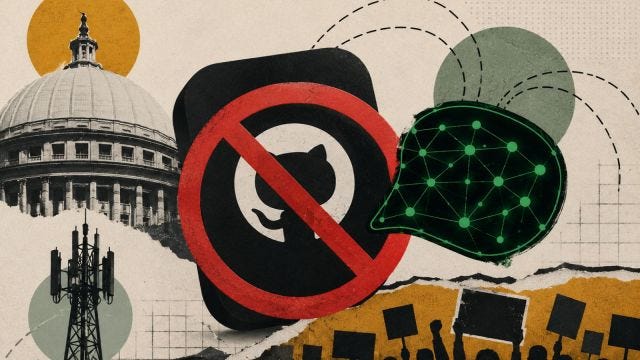
Delhi’s sixth mobile data suspension of the week cut service within 1.5 km of Jantar Mantar, taking UPI payments down with it. Students had camped there for five weeks demanding accountability for the NEET-UG 2026 exam paper leak; two days after the GitHub order, Education Minister Dharmendra Pradhan resigned. On July 23, India’s Cyber Crime Coordination Centre issued a three-hour compliance order to GitHub to disable three Bitchat repositories.
Bitchat routes messages over Bluetooth Low Energy, relaying through up to seven nearby devices without mobile data, Wi-Fi, accounts, or central servers. It also has end-to-end encryption for private messages. I4C argued the architecture “significantly impedes lawful interception, attribution, and investigation.” Jack Dorsey published the blocking order and said the Indian government “does not like technologies like Bitchat and wants it taken down.”
The three targeted URLs were the main source code repository, the Android build, and the APK distribution page.
🌍 Other Interesting News
Kidney storage on ice has capped at 24 hours for decades. A Texas A&M sealed device holds organs at -4°C under pressure without ice or cryoprotectants. Pig kidneys stored 48 or 72 hours then transplanted recovered faster than the ice standard; one pig was healthy at 200 days.
Northwestern researchers distributed entangled photons over 24.4 km of installed fiber between Evanston and Chicago while the same cable carried modern OLS traffic. Bell-state fidelity reached 94.2%. Teleportation on this deployed link is the stated next step.
🗓️ Events Radar
PMI Agile 2026 Annual Agile Alliance and PMI practitioners conference. Jul 26-28, National Harbor, MD.
Stellar Summit São Paulo 2026 Hands-on builder week for ~100 Stellar developers; payments, tokenization, and DeFi with bounties. Jul 30-Aug 6, São Paulo.
💡 Join Ipê City Community
Follow the journey and join the community on Telegram.