

Hey builders! Welcome to the 51st edition of Ipê News.
This week, Kazakhstan gave its cities and regions one digital architecture, researchers built viable viruses from AI-designed genomes, and Boeing agreed to put a flying-car stack inside Archer. We also found a powerful argument for faster medicine and one family turning a real accessibility need into free games.
🏘️ Community Updates
50+ people built a multi-agent social platform with us
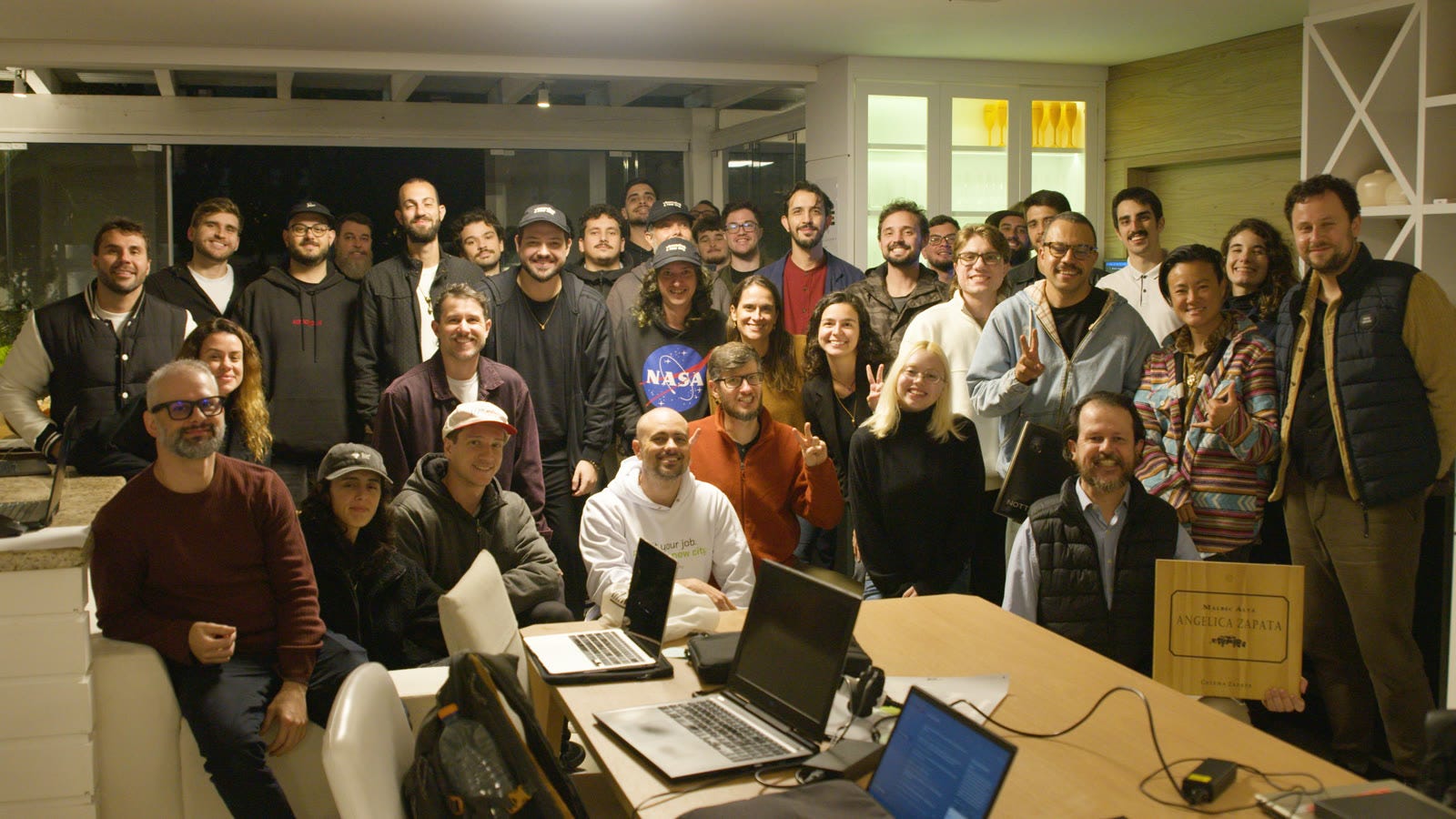
More than 50 people packed our house in Florianópolis for a workshop with Iggy Noronha. Together, the room built a small social platform powered by multiple AI agents and learned the core AI concepts by putting them to work.
🏫 Learning
What is an AI agent harness?

An AI agent harness is the software around an AI model that lets it do a job.
Take Claude Opus 5 and Claude Code. Opus 5 is the model. It reads your request, understands the code and decides what should happen next.
Claude Code is the harness. It opens the project, gives Opus access to the right files, lets it edit them, runs commands and tests, remembers the work already done and asks for permission before sensitive actions.
When you ask Claude Code to fix a bug, Opus 5 works out the solution. Claude Code handles the workspace and tools that turn the solution into real changes. The model provides the intelligence. The harness gives that intelligence a safe way to act.
🧬 Frontier Health
Ben’s games start with one player’s actual needs
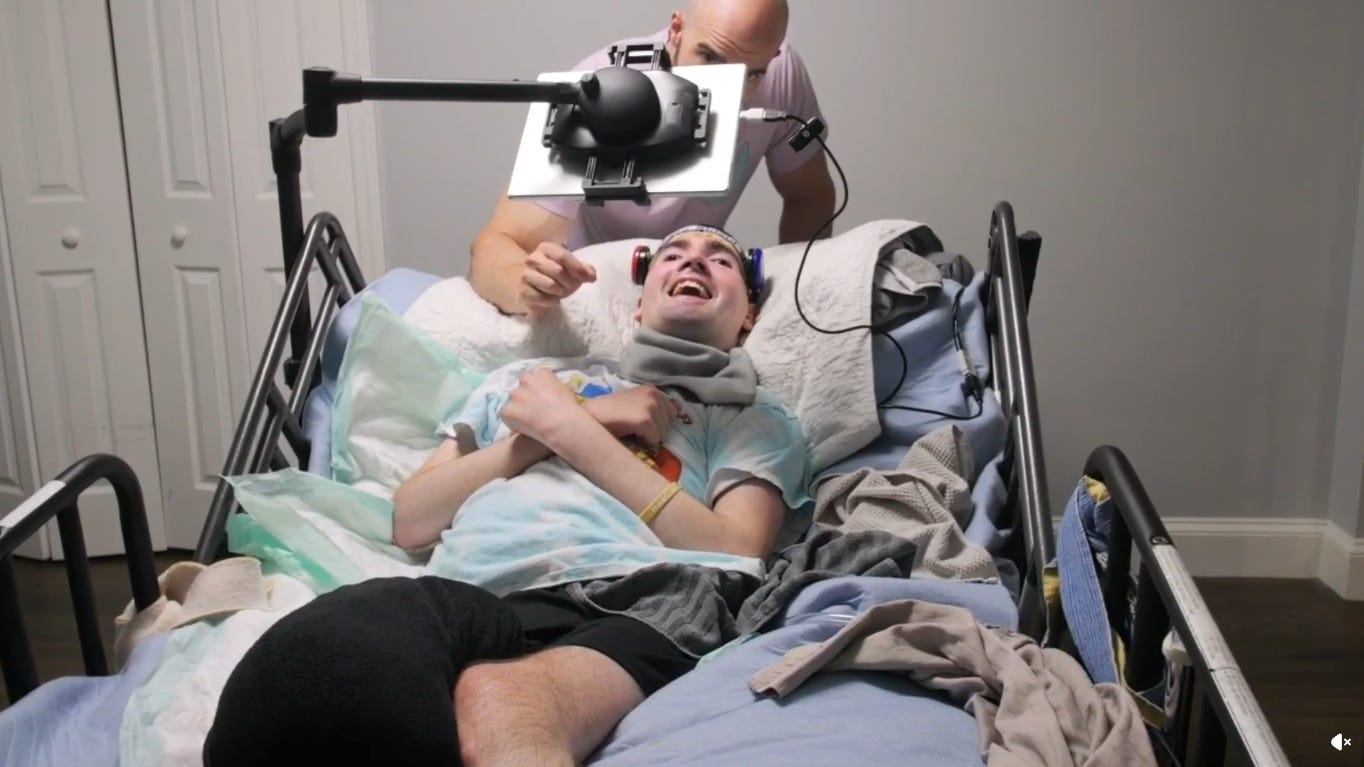
Ben is quadriplegic and nonspeaking, so most games were never designed around the way he interacts with a computer. His brother Ari and Ari’s wife, Nancy, used AI coding tools to build free browser games he can play with one or two switches.
Instead of demanding fast reactions, the games read interactions aloud and let a short or long press select, move backward or charge an action. Families can adjust the timing, visuals and difficulty. The games are free at Benny’s Access Hub, with an open guide for anyone who wants to build another one.
AI-designed bacteriophages worked in the laboratory

Phages are viruses that infect bacteria. Researchers are interested in them because they could help treat infections that antibiotics can no longer kill. In a new Science paper, a team used Evo 2, an AI model trained on DNA sequences, to design 302 versions of ΦX174, a tiny phage with only 11 genes.
The researchers managed to build 285 of those designs, and 16 became working phages. When they combined several of them, the mixture killed a drug-resistant E. coli strain that survived a mixture of natural phages. The successful designs were still about 97% identical to the original phage, so Evo 2 was exploring small changes around something biology had already built. Within that narrow space, it found new combinations that worked in the lab.
Every disease is a policy failure

Medicine has improved ordinary life so steadily that we barely notice the scale. Saloni Dattani points out that, for people of the same age in rich countries, the chance of dying from cardiovascular disease is now roughly one quarter of what it was in the 1950s. Death within a month of the most severe type of heart attack has fallen by about two thirds.
Her essay asks why we cannot move faster. Some limits are scientific, but others come from slow trials, scattered data, weak incentives, regulation and health systems that take years to adopt better tools. The title is provocative on purpose: biology causes disease, but institutions decide how quickly a promising idea becomes a treatment people can use.
🎓 Frontier Education
Wild Zebra raised $6 million for an AI tutor that answers with questions
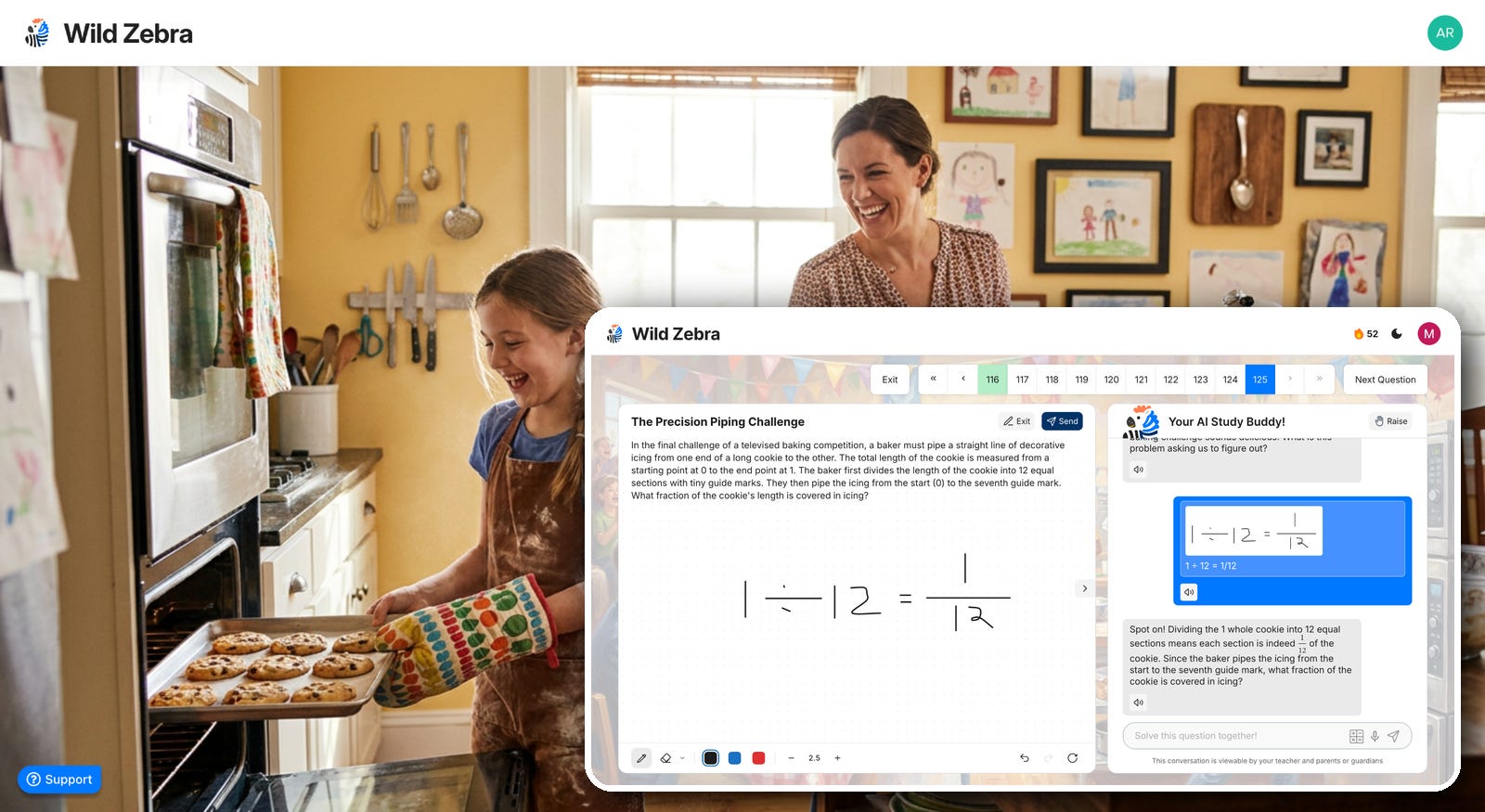
Wild Zebra built an AI tutor that answers a child with another question instead of giving away the solution. It changes examples to match the student’s interests and builds a learning tree showing what the child understands, where they are stuck and what should come next.
The company says tens of thousands of students in grades 2 through 9 use it, up from about 6,000 a year earlier. It has raised $8 million in total and is moving into schools. A 722-student pilot reported gains of four to eight percentage points for fifth- and sixth-grade students, but it was not an independent randomized trial.
🛡️ Frontier Security
Flock Safety is making audit controls mandatory after police-abuse scandals

Flock Safety operates a network of license-plate cameras that processes about 20 billion scans each month across more than 6,000 US communities. The system helps police find vehicles quickly, but many safeguards were optional. The Guardian reports that more than 50 officers have been accused of or charged with abusing it, including searches used to stalk former partners.
Flock will now require abnormal-use auditing and reduce default data retention from 30 days to seven. A suspicious search can automatically suspend a user until an administrator reviews it. Agencies can still keep data longer, and Flock has not explained exactly what its system will call abnormal. The safeguards are stronger, but their value will depend on the rules and what happens after a violation.
🏛️ Frontier Governance
Kazakhstan approved one Smart City and Smart Region methodology

Kazakhstan approved one national method for building its Smart Cities and Smart Regions. Instead of each city buying separate tools, the plan covers transport, utilities, public safety, drone infrastructure, school connectivity, local government and regional technology hubs inside one shared architecture.
The goal is to connect municipal data to common analytical systems and data lakes, so officials can see problems across services and forecast what may happen next. The government calls this AI-native governance. The architecture is now approved, but launch dates and operating results have not been announced.
🏗️ Frontier Infrastructure
Boeing is putting its flying-car stack inside Archer

Boeing agreed to sell three subsidiaries to Archer Aviation: Wisk Aero, which builds autonomous electric air taxis; Insitu, which makes drones; and SkyGrid, which develops software for managing aircraft in the sky. Boeing would receive 19.75% of Archer’s Class A shares and plans to invest up to $55 million in its next funding round.
If the deal closes, Archer would own the main pieces of a flying-car platform: the passenger aircraft, the autonomous-flight technology, operational drones and the traffic system coordinating them. The companies expect to close by the end of 2026. Certification, integration and commercial service still have to happen.
✨ Worth taking a look
Ordinary Abundance
See how astonishing electric light, tap water, refrigeration and recorded music once looked.
America already built the world’s largest science-vetting machine
NIH and NSF review more than 110,000 proposals a year. Could strong unfunded ideas and their reviews become useful infrastructure for other funders?
Drone warriors - Autonomous weapon systems and the wars of the future
A clear 43-minute DW documentary about how autonomy is entering battlefield systems one task at a time.
🗓️ Events
Startup Summit 2026 · August 26–28 · Florianópolis · Ten stages, 200 speakers, business rounds and hundreds of startups.
Próspera Weekend · August 28–30 · Roatán · Three days of tours, local projects and conversations inside Próspera ZEDE.
Builders Camp Pocket SP · August 29 · São Paulo · Three short talks and a hands-on Replit workshop at FIAP Paulista.
Rio de Janeiro | Claude Impact Lab · August 30 · Rio de Janeiro · Teams will use Claude to work on a real challenge from the city’s Education Department.
Infinita Week and Free Cities Conference · August 31–September 7 · Roatán · A week for new-jurisdiction builders, with the Free Cities Conference on September 3.
Maker Faire Curitiba 2026 · September 5–6 · Curitiba · A free, hands-on fair for robotics, fabrication, electronics and 3D printing.
Cursor Meetup #3 POA · September 15 · Porto Alegre · A 50-person meetup about spec-driven development with Cursor; approval required.
💡 Join Ipê City Community
Follow the journey and join the community on Telegram.