

Hey builders! Welcome to the 53rd edition of Ipê News.
This week, a rural Indian school used daily meal scans to turn hidden food-quality failures into action, the U.S. Army says a laser downed three threatening drones near the border, and Mozambique’s flood responders used locally operated drones to find stranded families. We also found a one-million-teacher Copilot rollout, the UAE’s homegrown cyber defenses, AI-assisted brain surgery, Network School’s Kazakhstan restart and more.
🏫 Learning
What is a regulatory sandbox?
A regulatory sandbox is a controlled test for a product or service that does not fit existing rules very well. A regulator lets a small group use it for a fixed period, with limits, extra reporting and safeguards. The company gets to test in the real world, while the regulator can watch what happens before changing the rules for everyone.
The UK’s Financial Conduct Authority used this model to let financial firms test new products and business models with real users. Brazil’s insurance regulator, Susep, also runs an experimental environment for insurers and publishes the participating companies’ financial statements. In the FCA’s first group, around 90% of the firms that completed a test moved toward a wider launch, and at least 40% received investment during or after the test.
This is useful because rules are usually written for products that already exist. A good sandbox creates evidence sooner and keeps a failure small enough to stop. Its real result should be a clear decision: expand the idea, change the rules or end the test. Without public criteria and a deadline, a sandbox can become a private shortcut instead of a useful experiment.
🧬 Frontier Health
An AI system helped surgeons remove a brain tumour while protecting a patient’s sight
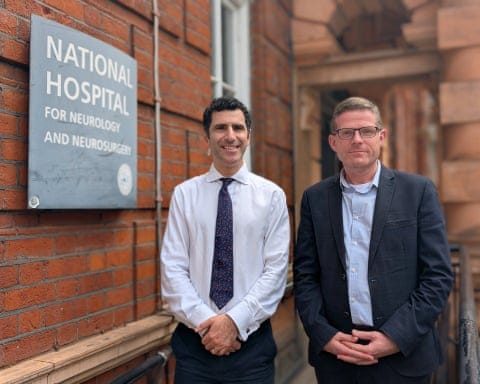
During surgery on Rhys Hibbert’s 11-millimetre pituitary tumour, an AI system analysed the live camera feed and colour-coded nerves and blood vessels. Hibbert said his sight was clear when he woke up, walked independently within a week and has returned to work.
The surgical team remained in control. This was the system’s first patient use inside a clinical trial, so it is one encouraging case rather than proof of better average outcomes.
🎓 Frontier Education
A rural Indian school used AI to catch problems on the lunch plate

At Todsa Ashram School in Maharashtra, an AI-enabled station checked meal images, temperature and portion data against the prescribed menu. It surfaced missing items, watery dal, poor-quality eggs and other problems that ordinary spot checks had missed.
The Better India reports that malnourished girls fell from 61 to 20 over eight months. NITI Aayog documents the original 27% malnutrition baseline and the system’s use of more than 2,100 data points, but not that follow-up result. The useful part is the feedback loop: measure meals every day, show vendors where they failed, then recheck children.
The Philippines is giving Copilot access to one million public-school teachers

DepEd and Microsoft say one million public-school teachers will get Copilot for lesson planning, assessments, communication and administrative work. Earlier training drew nearly 75,000 live participants and more than 175,000 registrations.
That is access and training at unusual scale, not proof of better learning yet. A separate 21-week Reading Progress pilot reported gains among 780 reassessed students, but Microsoft’s announcement provides no control group. The real test is whether teachers save time without outsourcing judgment or exposing student data.
🏙️ Zones and New Jurisdictions
Hong Kong put a pilotless flyer car into a live regulatory sandbox

EHang’s EH216-S took off, cruised, hovered and landed along a preprogrammed route at Hong Kong Cyberport. The public demonstration carried a robot, not passengers.
The flight is part of Regulatory Sandbox X, where the city is testing 33 low-altitude projects while drafting dedicated rules for unconventional aircraft. Commercial passenger service is not authorized, but the test is producing real operating data instead of waiting for a complete legal regime.
Network School is operating again, this time with Kazakhstan behind it


Network School is a live-in community for founders and remote workers. Its Malaysia node collapsed in July after local authorities sealed the coworking space and revoked its business licence. Police had found all 266 residents’ passports in order, but the community still dispersed across several Asian countries.
Balaji Srinivasan then signed a five-year memorandum with Kazakhstan’s AI ministry and, on August 17, posted a video saying the school was operating again there. The agreement brings government sponsorship and promises easier visas and company moves, but it does not create legal autonomy. The Malaysia field account shows that local support and ordinary licence compliance still matter.
🛡️ Frontier Security
The U.S. military says a laser downed three drones near the border

NORAD and U.S. Northern Command say an Army Multipurpose High Energy Laser shot down three cartel-linked drones in the Rio Grande Valley after they were judged a physical threat to military and border personnel.
A laser can keep firing as long as it has power, which makes it attractive against cheap drones. Officials did not disclose the precise location or even whether the engagement was over U.S. or Mexican territory. A laser-based border system also accidentally destroyed a U.S. government drone in February, so detection and authorization matter as much as the beam.
The UAE is building AI defenses for AI-assisted cyberattacks
The UAE’s Cyber Security Council says hacking attempts reached about 800,000 a day after the war with Iran began, four times the prewar level. It reported coordinated attacks on aviation, energy and education that were contained before disruption, while security firms say AI can shrink the time from a disclosed software flaw to exploitation from days to hours.
The response is Cyber Factory, a program with CPX to build detection and response tools inside the country instead of buying the full stack abroad. This is an operating sovereignty bet, not an audited success: the attack volume and containment claims come mainly from UAE authorities, and the reporting includes no public performance benchmark for the new systems.
Mozambique trained drone pilots before the flood arrived

A disaster program had delivered nine drone systems and was training 30 specialists across Mozambique’s weather, water, mapping, roads and disaster agencies when the floods arrived before graduation. The team deployed early, locating stranded families, mapping washed-out roads and streaming live imagery to rescuers.
Marracuene’s mayor says his district recorded no flood deaths, even though Mozambique’s wider flood disaster killed people elsewhere. That district result comes from the African Development Bank, which funded the project, and no independent evaluation ties it solely to drones. Still, the design is strong: equipment, local operators and ten future instructors were all tested in a real emergency.
💸 Frontier Finance
Argentines kept using stablecoins after the emergency eased

An analysis of Artemis, Lemon and Deel data says 94% of peso-denominated crypto trading goes into stablecoins. Wallet downloads kept rising and contractor USDC pay levelled off even after dollar controls eased and monthly inflation fell sharply.
That looks like financial infrastructure becoming a habit. The analysis comes from crypto investor a16z, however, and part of the contractor series is indexed rather than published in raw values.
🏗️ Frontier Infrastructure
A smart-village microgrid is bringing reliable electricity to Madimbo

Madimbo’s local solar, battery and smart-metering system supplies reliable electricity to about 700 households that previously had none and improves supply for roughly 1,650 more, according to Eskom.
The microgrid can operate as an island and support homes, schools and clinics. It began operating in December 2025; the scale and performance figures are attributed to Eskom rather than an independent audit.
⚖️ Frontier Policy
A judge blocked the Pentagon’s Anthropic blacklist as retaliatory

After Anthropic resisted unrestricted military use of Claude for autonomous weapons and domestic mass surveillance, the Pentagon labelled it a supply-chain risk. Judge Rita Lin ruled that the California designation was illegal, retaliatory and violated the First Amendment.
The line matters: procurement power cannot be used to punish a company’s stated model-use limits. A related case in Washington remains pending, so the dispute is not finished.
🔎 Worth taking a look
Fuck Cancer: an AI skill for organizing cancer documents
Peter Yang’s open-source skill turns cancer reports into a practical brief with confirmed facts, open questions, plain-language terms, up to three next actions and a care log. It can run locally or update a shared Google Doc, and it explicitly avoids diagnosing cancer, choosing treatment or deciding trial eligibility.
🗓️ Events
Hackathon Universitária Superteam Brasil · Submissions through September 7 · Online · University teams propose Solana-based solutions; free entry and 3,000 USDG in prizes.
Space Mining Challenge Brasil · September 11–13 · Online · Use NASA data and AI to make decisions with limited information.
Inteligência Artificial para transformar grandes metrópoles · September 15 · São Paulo · Practical AI for mobility, infrastructure, planning and public services.
AI & Market Access Brazil · September 16 · São Paulo · Entering Brazil, locally built AI and Latin America’s role in the AI economy.
TechGrid 2026 · September 16 · Rio de Janeiro · Compute, energy, data centres, connectivity, capital and policy.
Techstars Startup Weekend Garopaba: Smart Cities · September 18–20 · Garopaba · Build and pitch ideas for mobility, tourism, sustainability and urban life.
💡 Join Ipê City Community
Building something ambitious or looking for people who are? Join the Ipê City community on WhatsApp.