

This week: a speaking avatar controlled by brain signals, a popup community in Japan, and water that reaches 32 homes without pumps. Plus, AI for classrooms and public services, an explanation of model distillation, and our meetup in Floripa on Thursday.
Community Updates
Join us in Floripa this Thursday
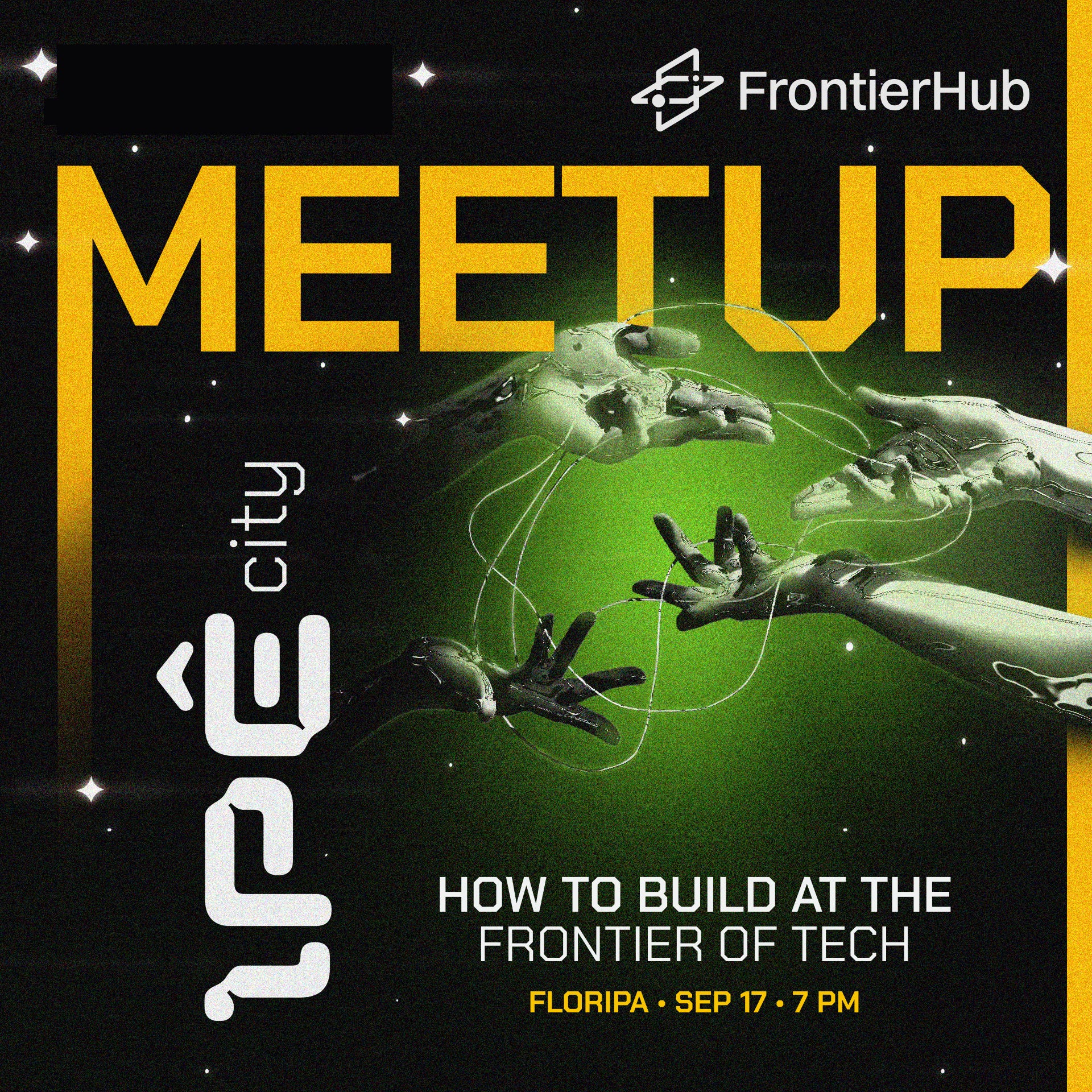
This Thursday, Sep 17, 2026, we’re getting together at Frontier Hub in Florianópolis to talk about building at the frontier of tech. Zeugh from blockful, Iggy from Flow, and I will join the conversation. Doors open at 6 PM and talks start at 7 PM, followed by guided networking, food and drinks. You’re welcome to arrive early with your laptop and work from the hub.
Learning
What is model distillation?
A powerful AI model can be expensive to run. Model distillation is one way to pass some of what it can do to another model, often a smaller one. The original acts as the teacher, and the new model is the student.
For example, a team could ask the teacher to solve thousands of coding problems, then use those answers to train the student. The student learns patterns from the examples and develops its own internal settings. Once trained, it can answer new questions without asking the teacher each time.
The aim is to keep useful skills while making the model cheaper and faster to run. But the student can miss things the teacher handles well, or pick up its mistakes. It still needs to be tested on new tasks to see what it actually learned.
This is the technique behind Anthropic’s claim about three Chinese AI labs. In February 2026, Anthropic accused DeepSeek, Moonshot and MiniMax of using more than 16 million exchanges with Claude to improve their own models. It said they used fraudulent accounts and violated its terms of service. Those are Anthropic’s allegations.
Labs also routinely distill their own models to make smaller versions. Anthropic’s accusation concerns how the companies obtained and used Claude’s answers. The teaching method itself is a standard part of AI development.
Frontier Societies
A month of living and building together in Japan

ZuCity has brought four properties in Komoro, Japan, into one popup community. They’re all within a five-minute walk, with shared homes, places to work, and a venue for music and workshops. Visitors can stay for a while and try living and building together.
This year’s programme runs from September 4 to October 5. Community access starts at $21 a day, with lodging separate, so you can join the gathering without committing to a permanent move.
Frontier Health
A brain implant lets people speak and gesture through an avatar
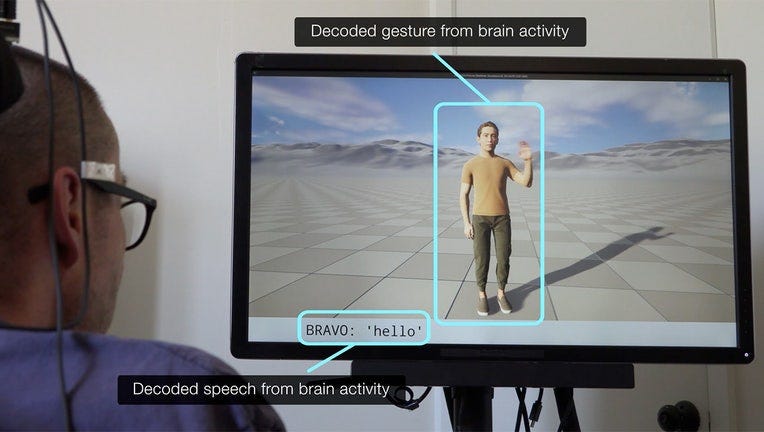
In a small study, two people with paralysis used a brain implant to make a digital avatar speak and gesture in real time. The implant picked up signals as they tried to speak and gesture, and a computer turned those signals into the avatar’s voice and body language.
Three participants helped researchers map the signals, and two tested the live system. It’s still a wired research setup with a limited set of commands. But it gives someone a way to express more of what they mean through both words and gestures.
Frontier Education
UNESCO recognizes two ways to bring AI into the classroom
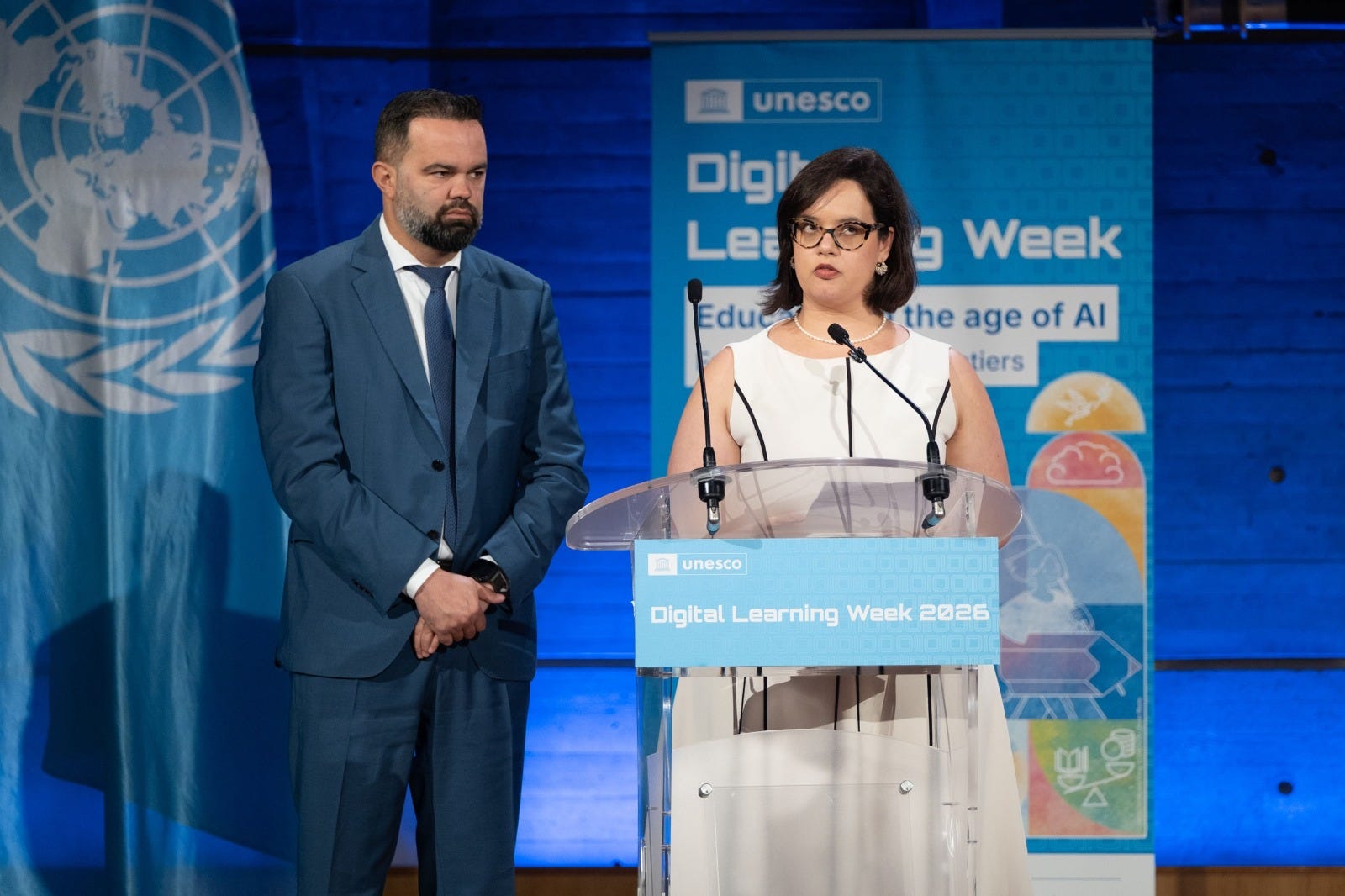
In public schools in Paraná, Brazil, a student can write a draft, get AI feedback, revise it and then work through it with their teacher. That’s how Redação Paraná, one of this year’s UNESCO education technology prize winners, fits AI into writing practice. UNESCO says the platform reaches about 850,000 students in 2,000 schools.
Finland’s Generation AI won alongside it. Its classroom projects help students investigate how AI works and build with it themselves. About 1,500 students and teachers have taken part in its workshops and classroom activities.
Bodhan releases tools for apps that speak Indian languages

An education app is a lot more useful when it understands the language a student actually speaks. Bodhan AI, a project incubated at the Indian Institute of Technology Madras, has released models that transcribe speech, read text aloud, translate and extract text from documents. Developers can run the models themselves or connect an app to versions hosted online.
That gives builders reusable parts for multilingual lessons and classroom tools. Translation quality varies by language, and developers need to check the license terms before using the models in a product. Bodhan’s own Student Tutor and Teacher Assistant are still invitation-only.
Frontier Governance
AI-written requests are adding to the workload of public services

Filling in a benefits application or challenging an official decision can take more time and confidence than people have. AI can help explain the rules and put a request into words. Researchers collected 84 potential cases across 11 jurisdictions where public services faced a rise in requests that officials or other credible sources linked to AI.
Some requests are getting much longer, too. British council lawyers told the BBC that complaints had grown from a single page to 19–27 pages, sometimes with incorrect legal references. The study can’t tell us how much of the increase AI caused, but it points to a practical problem: how can services handle more requests without making it harder for people to be heard?
Frontier Infrastructure
Gravity brings water to 32 homes in an Indian village

Women in Gargama, a village in Jharkhand, India, used to make a roughly one-kilometre trip to collect water. A system completed in August now brings spring water to all 32 households, according to Keystone Foundation’s new report.
Water collects in a chamber at the spring and flows through pipes to the homes. Gravity moves it through the system, so there’s no need for electric pumps.
Worth taking a look
Data Cure: Stories of Healing and Hope
This 27-minute PBS documentary follows a superbug survivor and researchers working on new treatments. It covers phage therapy, which uses viruses to attack bacteria, along with AI-assisted drug design and automated stem-cell production.
AI model cards you can browse like trading cards
Free Systems has put together cards for 28 AI models, with capabilities, safety information and links to the original research. A handy starting point for exploring what’s available. The ratings involve judgment, and scores from different tests aren’t always directly comparable.
Events
Sep 19, 2026 · Codex Community Meetup · Rio de Janeiro · IBMEC Barra · 09:30–14:00 BRT
Build in an existing web app, from requirements through implementation, tests and review. It uses Next.js, React and TypeScript. Bring a laptop. Registration is open until September 18 at 23:59; the event page doesn’t list a price.
Sep 22, 2026 · IA na Prática · Porto Alegre · A Casa Conecta · 09:00–13:00 BRT
Practice prompts, no-code agents and process automation. Bring a laptop. Tickets are R$320 through September 18.
Sep 24, 2026–Sep 25, 2026 · Intelligent Automation + AI Strategy Summit · Curitiba · FIEP · 08:00 Thursday–19:00 Friday BRT
Two days on AI agents and software that automates routine office tasks, with practical examples and an expo. Individual Congress tickets are R$897 through September 23; group discounts are available.
Sep 24, 2026 · São Paulo BitDevs #048 · São Paulo · Casa21 / Vinteum · 18:30–22:00 BRT
Open technical discussion of Bitcoin, Lightning, research and open-source proposals. All levels are welcome. RSVP is open; the event page doesn’t list a price.
Sep 26, 2026 · Devin Community Meetup · Rio de Janeiro · FIAP Botafogo · 08:30–12:00 BRT
Build local projects with AI coding tools. The detailed talk schedule is still to be announced. Registration is free.
Come build at the frontier. Join the Ipê community on WhatsApp.