

Hey builders! Welcome to the 57th edition of Ipê News.
America.gov now answers questions using government sources, with more public services planned for 2027. A mother’s ChatGPT search led to a rare diagnosis confirmed by genetic testing. We also cover Brazil’s new crypto ranking, shared tools for AI education, Nairobi’s restored libraries, an early cancer trial and what a connected car can reveal.
🏛️ Frontier Governance
America.gov opens an AI front door to US services

America.gov now lets people ask questions about government services in everyday language. Its AI answers draw on official federal, state and local sites and include source links. The launch shows a bigger plan: bring tasks such as changing a legal name or applying for a passport into one place. Those services are previews for 2027, not live yet.
Balaji Srinivasan compared the unveiling to a tech product launch, arguing that people will be able to try public-facing features and judge whether they work. The current answers are a start; the promised forms and applications in 2027 will be the real test. Watch the original White House livestream.
🧬 Frontier Health
A mother’s AI search pointed to her daughter’s rare condition

Lily, a toddler in Bath, needed heart surgery at four months old. Her pupils also stayed unusually wide. Her mother, Rosie, entered the symptoms into ChatGPT, which suggested a rare genetic condition called multisystemic smooth muscle dysfunction syndrome. Some doctors thought it was too rare to be likely. Genetic testing later confirmed it.
Only about 70 people worldwide are known to have the condition. Rosie and Jonny have started a charity to fund research and help identify other families living with it.
A cancer treatment tries to turn the liver into an immune-system factory

Vironexis is testing a treatment for acute lymphoblastic leukemia, a blood cancer. In three people whose disease had returned after other treatments, sensitive tests could no longer detect leukemia after one dose. The treatment, called VNX-101, uses a modified virus to give the liver instructions for making a protein that draws immune cells to the cancer.
It’s an early trial, and all three patients lacked antibodies that might block the delivery virus. One still had no detectable leukemia nearly nine months later, before a stem cell transplant. Vironexis also reported immune reactions and problems affecting the nervous system as it tested different doses; those resolved with standard care. The promising result now needs to hold up in more people.
🎓 Frontier Education
Learning Commons opens shared building blocks for AI education
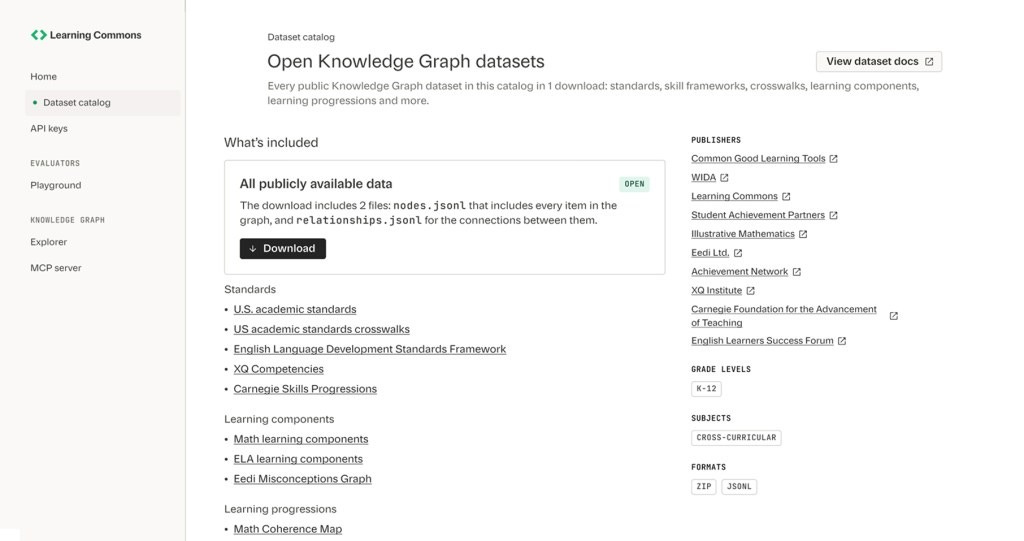
Learning Commons has launched shared tools for people building AI products for schools. One maps what students are expected to learn from kindergarten through high school; another checks whether AI-generated lessons fit those goals. Six education companies announced that they are integrating the tools.
Canva Education is already using the data to help teachers make lessons aligned with local learning standards. For a smaller builder, the shared map and checks offer a starting point that would otherwise take time and specialist knowledge to build.
🔐 Frontier Security
A controlled test shows how much a connected car can expose

In an ABC Four Corners investigation, security researcher Dan Hreszczuk tested his own BYD Shark in Australia. He found a way into the car’s system that he says required no password. During a controlled drive, he tracked the car, switched on its microphone and changed the lights and wipers from a distance.
That’s a lot of access from a vehicle that also records where it goes. The test was on his own car, so it doesn’t show that other BYDs can be accessed in the same way. BYD says it stores Australian vehicle data in Australia and has not given it to Chinese authorities.
💸 Frontier Finance
Brazil ranks first in Chainalysis’s grassroots crypto index

Brazil tops Chainalysis’s 2026 ranking of crypto adoption, coming first among 117 countries, ahead of the US. The index looks at value moving through crypto services, between people and across borders, along with crypto held in wallets and services. Brazil scored near the top on all four measures.
Chainalysis estimates $252.5 billion in Brazil-linked crypto activity from July 2025 to June 2026. That measures value moving, not the number of Brazilians using crypto. Brazil’s total activity fell 1.6% from the previous year, but its strong showing across all four parts of the index put it first.
🏗️ Frontier Infrastructure
Nairobi’s restored libraries give people a place to work and get online
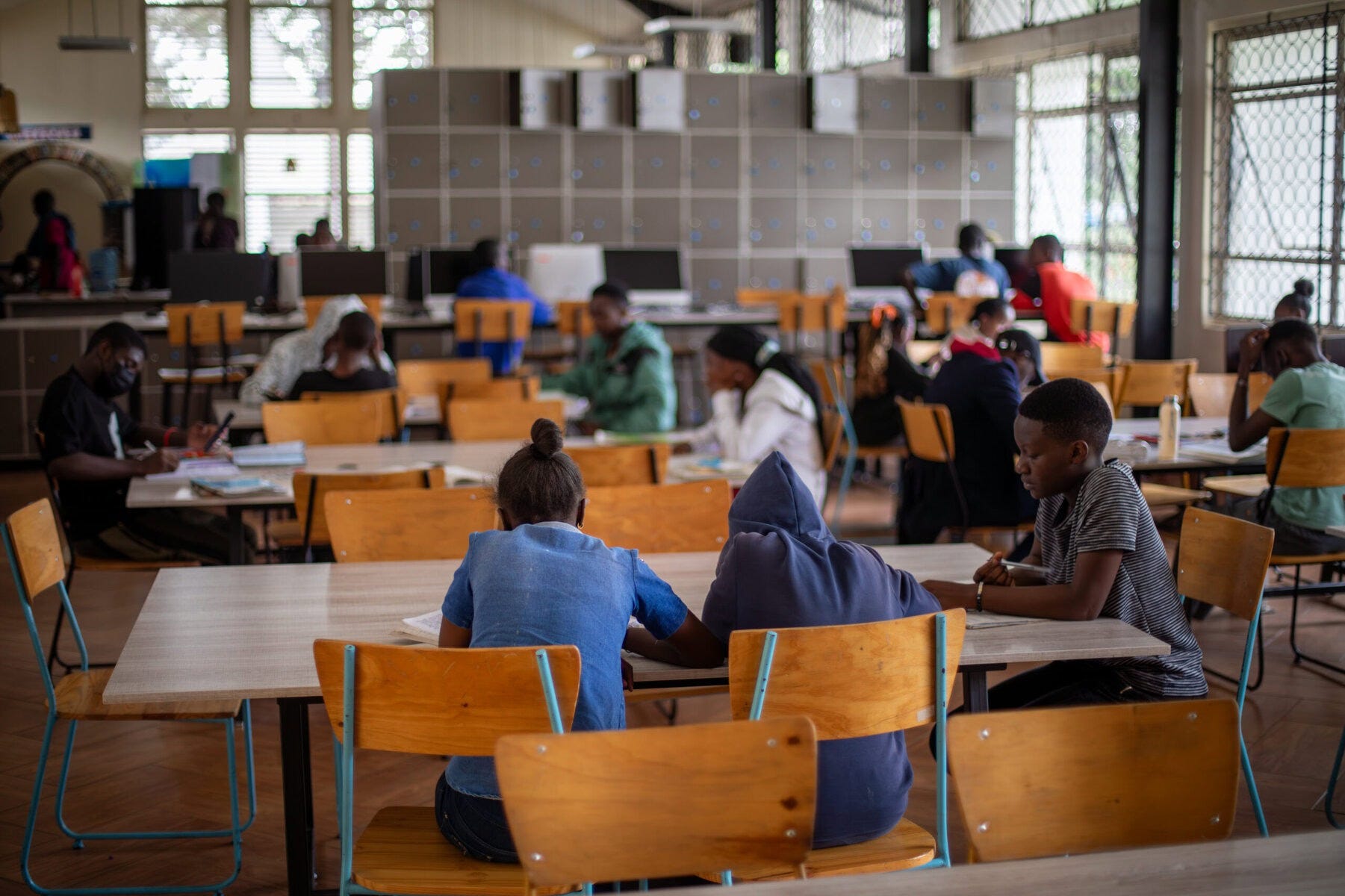
When Sunil Totti had an online job interview, he worried the power would go out at home in Nairobi. He knew he could go to Eastlands Library, where he could count on electricity, internet and a quiet place to work. Book Bunk and Nairobi County have restored Eastlands and another public library that many people once avoided.
Both libraries now have computers and free programs as well as books. Book Bunk reports more than 192,000 users across its restored sites, and work on a third library is underway. For Sunil, the space has also meant a dependable place to study software and take on freelance work.
⚖️ Frontier Policy
The SEC opens a limited path for trading tokenized US stocks

The US Securities and Exchange Commission has opened a route for certain platforms to trade digital tokens representing publicly listed stocks. A token must give its holder the same rights as an ordinary share, and the platform has to limit which stocks and how much trading it handles.
The trades would take place in automated pools open to approved participants. Companies must be told when an outside party offers tokens tied to their shares, and token trading has to stop whenever trading in the original stock stops. The permission lasts up to five years while the SEC considers longer-term rules.
🌱 Community Updates
iHuman is building a place to learn, connect and find work
At our September 17 Ipê Meetup, Fran Furtado opened one of our fortune cookies and won a spot in Ipê News. When we asked what she was building, she told us about iHuman: a platform meant to bring learning, work opportunities and professional communities into one place. Fran sees how scattered that journey can be. People take courses on one platform, look for jobs on another and try to build useful connections somewhere else.
Fran wants iHuman to help people develop skills, meet peers and mentors, find opportunities related to what they’re learning and turn what they know into income. Companies, creators and professionals would be able to share knowledge, post openings, find talent, run events and build communities around their work. She says the platform is being built for app and desktop use, with an AI agent integrated into the experience.
Her immediate goal is to help young people connect learning with real work, while giving mentors and creators more ways to reach people and earn from their expertise. Fran says iHuman was selected among the top five projects in Jornada Sebrae Acate. Her longer-term hope is to grow it into a global platform where people can build opportunities from their skills, knowledge and connections. You can follow the project at iHuman’s website.
IpêCast #9: The new rails of global money

October 1, 12:00 BRT · Online on X and YouTube. Rafael Castaneda (Casta), co-founder of Oxus Finance, joins Andre Froes to talk about cross-border payments, stablecoins and financial privacy as AI changes finance. Register on Luma.
📚 Worth reading
Weapons of mass decentralization
How did the spread of iron change who could fight wars? Patrick Fitzsimmons follows that question from the Bronze Age to today’s cheap drones, which he argues can shift power toward smaller forces.
The real AI economy is being built by ordinary people
Rest of World talks to workers across Asia and Africa about the ways they use AI on the job. In Lagos, makeup artist Nureeyah Ogunmuyiwa used ChatGPT to plan her first hire, then brought on an assistant and opened a studio. She says the tool also helps with marketing, pricing and everyday decisions.
🗓️ Events
Network State Conference: Singapore
October 9, 09:00–20:00 SGT · Singapore and online. Talks and gatherings around network societies. In-person tickets are paid; remote access is listed as free.
Claude for HR Meetup
October 14, 13:00–16:30 BRT · São Paulo. Practical sessions on using Claude in people and HR work. Registration requires approval.
Lovable Day São Paulo
October 16, 08:30–18:00 BRT · Community Creators Academy, São Paulo. Talks and demos on building apps with AI; paid registration, with remote workshops for ticket holders earlier that week.
Hackathon Tecnoagro, second edition
October 16, 09:00–17:00 BRT · Arena UPF Parque, Passo Fundo, RS. Teams work on agribusiness challenges with mentors. The listing says registration is free; check current availability before traveling.
Rails Girls São Paulo
October 17, 09:00–19:00 BRT · Pinheiros, São Paulo. Free programming workshop for women, trans and nonbinary people; apply through the event page.