
Hey builders! Welcome to the 43rd edition of Ipê News.
🏘️ Community Updates
Ipê City Village 2026 brought 535 participants from 13 countries to Jurerê, Florianópolis, with 55 residents staying for the full build cycle. Three Hacker Houses ran alongside a sponsored residency with Artizen. Fifteen workshops and 24 projects on Demo Day closed out the month.
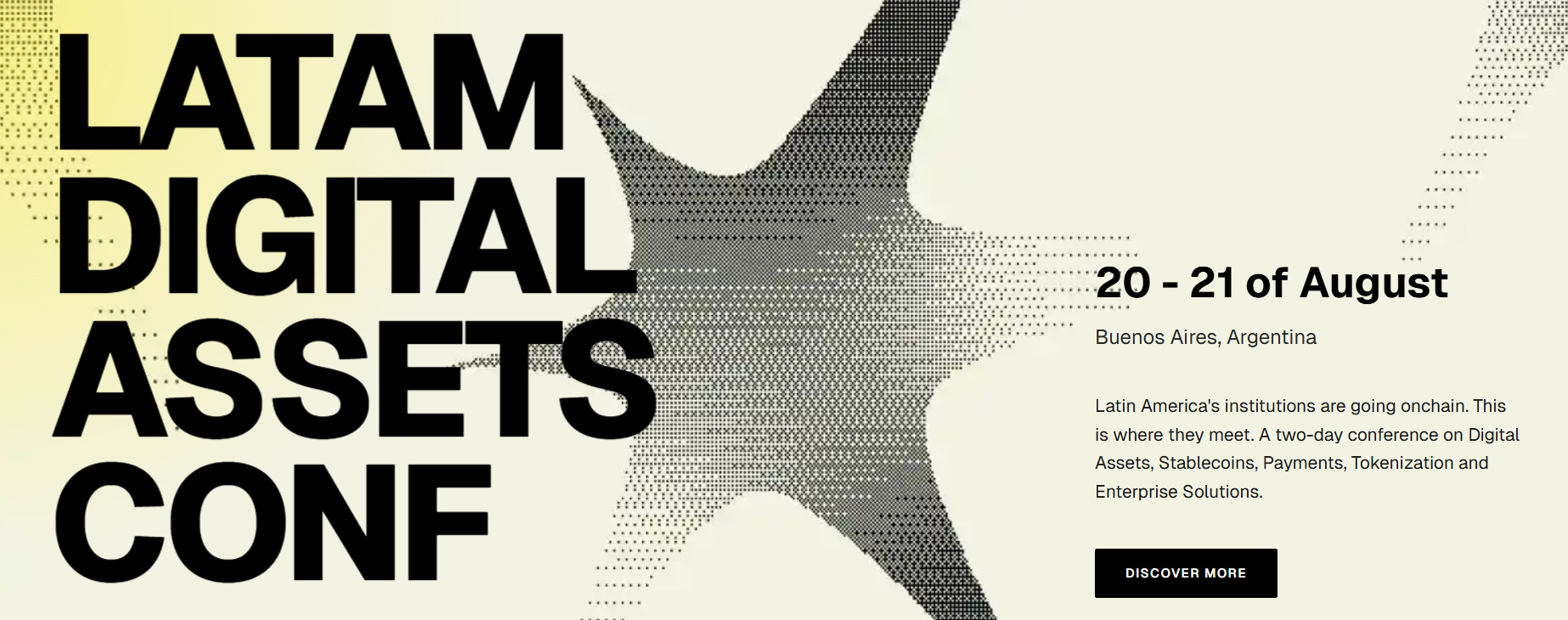
Ipê City is partnering with Crecimiento to bring community members to the LATAM Digital Assets Conference, taking place August 20 and 21 in Buenos Aires. The event is free but curated, meaning attendance requires approval, not just registration.
Community members can apply using the exclusive code LDAC-IPE when submitting.
🏫 Learning

Most payments still run through a human at some point. You approve the transfer, hit send and type in a confirmation code. Programmable payments take some of theses step out, so the money just moves on its own the moment a condition you set up ahead of time is met.
You set the rule up once, and from there the payment pretty much takes care of itself. A smart contract holds the condition (pay the supplier the moment the invoice clears), and a stablecoin carries the value across in seconds without the price lurching around underneath it. Put an AI agent on top and that same rule scales to real volume: it can hit an API a thousand times and pay for every single call, always inside the spending limits you set in advance. Companies are already trying this out for treasury automation, per-request micropayments, and tokenized asset settlement.
We covered x402 back in edition 39, the open protocol that lets agents pay per HTTP request, and edition 42 brought MCP, which gave agents the hands to actually act on outside systems. Programmable payments are the layer sitting underneath both of those, the logic that decides which conditions release the money, how much, and to whom. In March, Visa put out its own spec for machine payments that reaches across both stablecoins and card rails. Brazil is running a few regulatory steps behind, since the Banco Central is still drafting its framework for digital asset providers, but Valor pushed the topic onto the local agenda this week.
🌐 Network Societies Update
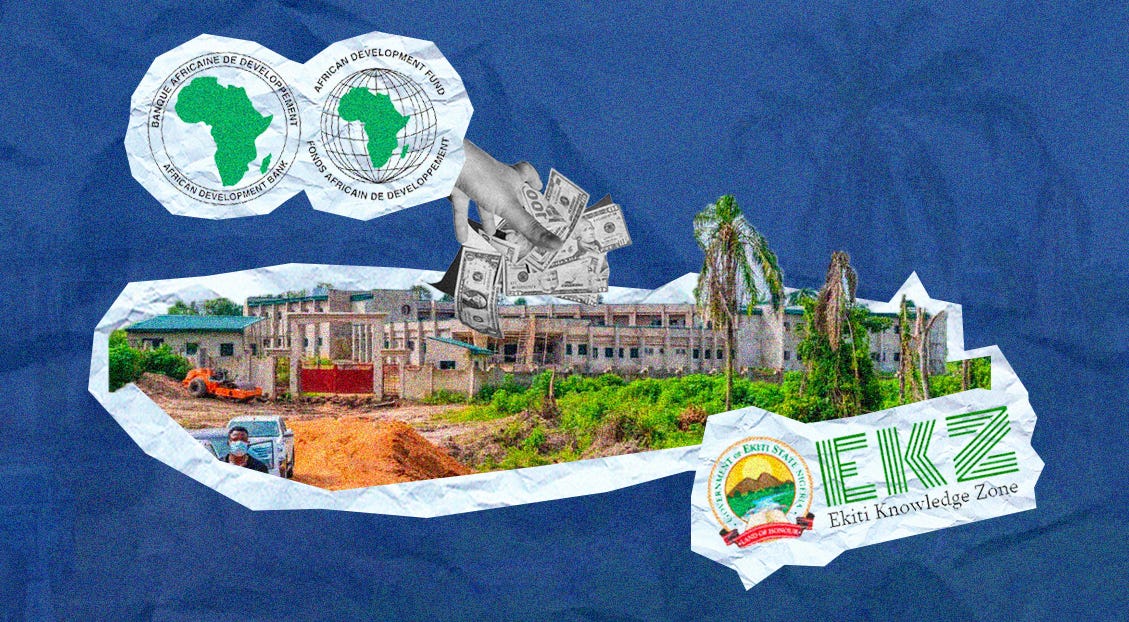
Nigeria broke ground on the Ekiti Knowledge Zone on June 9 in Ado Ekiti, with Vice President Kashim Shettima leading the ceremony. The zone is a designated free trade zone backed by $80 million from the African Development Bank and the federal government, covering 955 hectares.
The plan is to fill it with innovation labs, startup incubators, research centres, training facilities, and co-working space for local and international tech companies. State targets are 20,000 jobs in phase one and up to 100,000 across all phases. Worth context: the project has been in development since 2013, and the FTZ designation came under Buhari, so June 9 was the first actual shovel in the ground after more than a decade of paperwork.
🛠️ Parallel Institutions
Starting June 23, you can earn yield on stablecoins without broadcasting your position to the entire blockchain. That’s what Zama shipped: a confidential USDC vault powered by Fully Homomorphic Encryption (FHE), the same technology covered in edition #37.
Think about what happens when you deposit into a standard DeFi vault on Morpho. Every detail goes public instantly: how much you put in, when you did it, what direction you’re taking. For most users, that’s not a problem. But for anyone moving serious capital, that transparency is a liability. Bots can front-run you. Competitors can copy your positioning. The openness that makes public blockchains trustworthy also turns them into a goldfish bowl for serious capital.
FHE solves this at the math level. The vault can compute interest, handle liquidations, and settle correctly on encrypted data, without ever decrypting what you deposited. The yield strategy stays the same, and your position stays private.

Since 2020, Law 14.063 has made ICP-Brasil the mandatory gateway for qualified digital signatures in Brazilian contracts. PL 1195/2025, a substitute bill authored by Zaeli, proposes a parallel path: parties may agree to accept digital signatures and proof mechanisms, including blockchain, without an ICP-Brasil certificate.
The CCTI committee cleared the text on May 13. A plenary Chamber vote and Senate passage are still required to enact the law.

Filipino coconut farmers typically burn the husks left after harvest, a byproduct with no local buyer and no fast decomposition path. Fortuna Cools, founded by Stanford school graduates David Cutler and Tamara Mekler, purchases those husks directly from smallholders and presses the fibers into building insulation panels. The flagship product, the Nutshell Cooler, uses 37 husks per unit; by mid-2026, the company had diverted more than 240,000 husks from open burning.
Coconut husk fiber achieves a thermal conductivity of roughly 0.045 W/mK, in the same range as mineral wool and glass wool. The same fibrous microstructure, thousands of interlocked air pockets, also attenuates sound, so the panels perform double duty in buildings where both heat gain and noise are problems. Fortuna is extending the same base material into cold-chain packaging.
The supply chain logic inverts the petrochemical default: raw material starts at the farm, value flows back to the smallholder, and no new extraction is required.
🌍 Other Interesting News
Google and Monashees launched Gama Fund on June 10, expanding Google’s AI Futures Fund to Brazil. Each selected startup receives up to $2M in co-investment, $350K in Cloud and Gemini credits, early DeepMind access, and a hub at IPT Open in São Paulo. Applications close August 10; the first cohort begins October 19.
Grok Imagine Video 1.5 went into wide release on June 17 at grok.com/imagine. The image-to-video model from xAI ships with sharper realism, better physics, and faster generations. Speed and physical coherence are the product battleground. Video generation has moved from demo to shipped.
🗓️ Events Radar
Web3Experts Brazil - Developer-only conference; Solidity, DeFi, ZK proofs, and protocol auditing across three parallel tracks. Jun 26-28 - Oracle, São Paulo.
LATAM Digital Assets Conference - Free but curated; Ipê City members apply with code LDAC-IPE. Aug 20-21 - Buenos Aires.
Ipê City Town Hall - Community governance, grants, and project updates. 2nd & 16th monthly - 10:00 GMT-3.
💡 Join Ipê City Community
Follow the journey and join the community on Telegram.